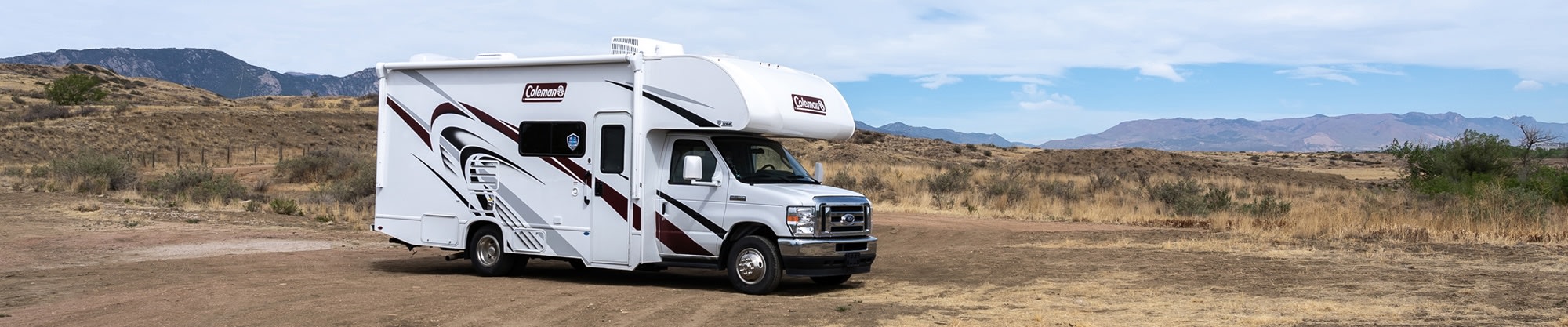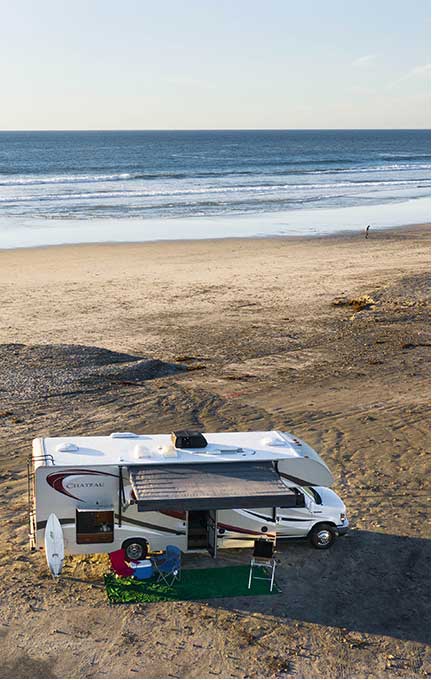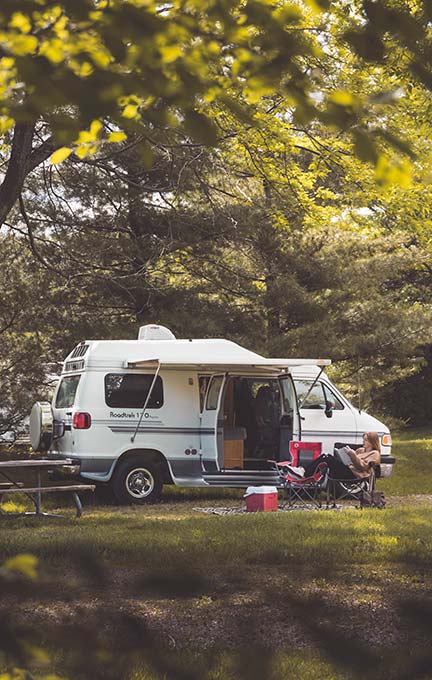

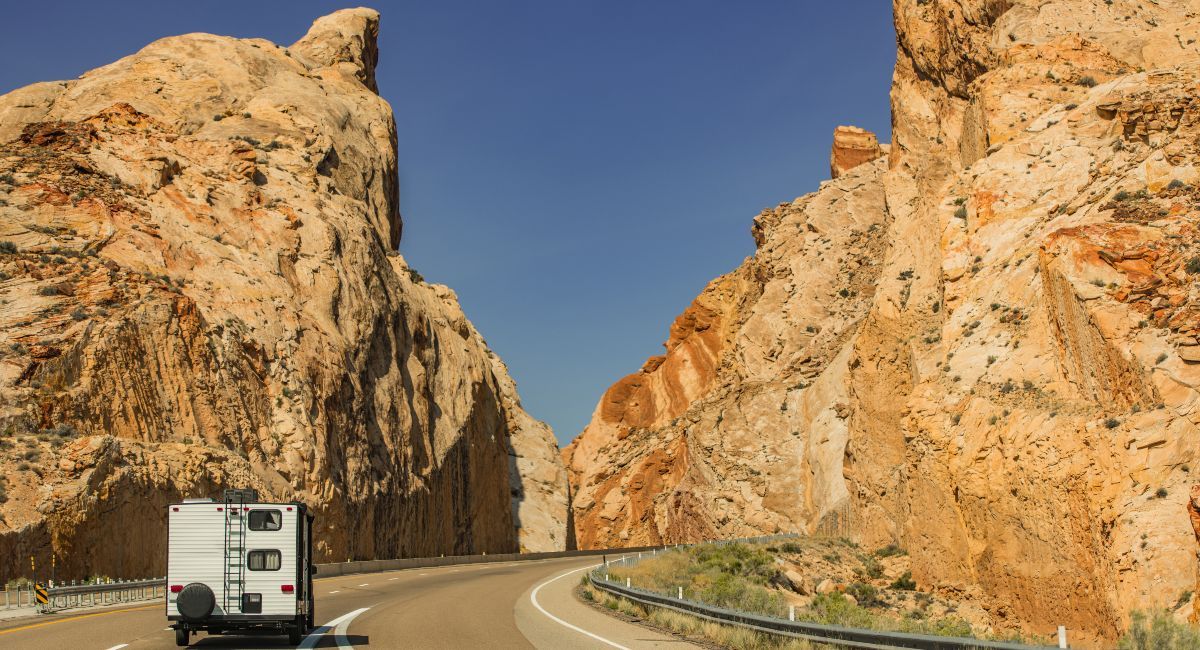
The Southwest's national parks are the country's best RV loop, full stop. Zion, Bryce, the Grand Canyon, Arches, Canyonlands, Capitol Reef, and Monument Valley sit close enough together that you can string them onto one trip and far enough apart that the BLM-boondocking stretches between them become some of the best nights of the drive. The car-and-hotel itineraries that dominate the SERP miss the RV layer entirely. This guide builds the loop as a renter playbook: timing, per-park RV access, the desert heat-and-water reality, and the 2026 changes (the new Zion-Mt. Carmel rule, the digital America the Beautiful pass, the North Rim coming back online) that every old itinerary skips.
The short version:
- The classic loop links Zion → Bryce → Grand Canyon → Monument Valley → Arches/Canyonlands → Capitol Reef — plan 5 days for a sampler, 7 for the core, 10–14 for the full circuit.
- Go in spring or fall. Summer desert heat is brutal and dangerous for kids and pets left in a parked rig.
- Most in-park campgrounds are no-hookup. Notable exceptions: Watchman (Zion, electric on A/B loops) and Trailer Village (Grand Canyon South Rim, full hookups).
- New for 2026: Zion bans rigs over 35'9"/7'10"/11'4"/50,000 lb from the Mt. Carmel Highway starting June 7. America the Beautiful pass is now digital ($80 for residents, $250 for nonresidents). Arches dropped its timed entry.
- Long desert legs between parks are prime free BLM boondocking — self-contained rig required.
What's the best Southwest national parks loop for an RV, and how many days?
The classic loop runs Zion → Bryce → Grand Canyon (South Rim) → Monument Valley → Arches/Canyonlands → Capitol Reef, looping back to Las Vegas or Salt Lake City.
A 10-day Southwest national parks RV itinerary, day by day
- Day 1 — Pickup → St. George or Springdale. Pick up the rig, grab groceries and propane, and arrive at the gateway.
- Days 2–3 — Zion (Watchman Campground). Riverside Walk, Angels Landing (permit lottery), and the Emerald Pools.
- Day 4 — Bryce (Sunset or North Campground). Sunrise, Sunset, and Inspiration Points, plus the Fairyland Loop.
- Days 5–6 — Grand Canyon South Rim (Trailer Village or Mather Campground). Bright Angel Trail, sunset at Yavapai Point, and Desert View Drive.
- Day 7 — Monument Valley (The View Campground, dry camping). Mitten Buttes, the Wildcat Trail, and a classic sunset.
- Days 8–9 — Arches (Devils Garden Campground or a Moab gateway park). Delicate Arch, Devils Garden, and Park Avenue.
- Day 10 — Capitol Reef (Fruita Campground) or the drive back. Hickman Bridge, the Petroglyph Panel, and the Scenic Drive.
Variations to know:
- 5-day sampler: Skip Monument Valley and Capitol Reef. Zion → Bryce → Grand Canyon → back to Vegas. Best for a long-weekend extension.
- 7-day core: Add Arches but skip Capitol Reef and Monument Valley. Most renters do this.
- 14-day full: Add Canyonlands (Needles District for the desert solitude), a Sedona side trip, and a stay at a full-hookup park to reset between dry-camp stretches.
- Connect to other trips: Connect to Route 66 at the Williams/Grand Canyon segment, or extend west along the Pacific Coast Highway after the LA finish.
Most renters base this trip from Las Vegas (Vegas → Zion is 2.5 hrs) or Salt Lake City (SLC → Moab is 4 hrs). St. George near Zion and Moab, the Arches and Canyonlands gateway are both convenient mid-loop pickups.
When's the best time to do the Southwest by RV?
Spring (April–May) or fall (September–October). Both bring 60s–80s°F daytime highs, cool nights, and lower crowds than summer. Summer in the Southwest desert is brutally hot — 100–115°F at the Grand Canyon's inner canyon, 90s–100s at the rim and at Arches, with overnight lows that still don't drop below 70°F in July at Arches. Winter brings snow at Bryce and the North Rim and cold nights at Zion but is the quietest season everywhere.
A more granular feel:
- March: Variable. Bryce still has snow at 8,000 ft. Zion and Arches are coming alive. Light crowds.
- April–May: Prime window. Pleasant temperatures everywhere; wildflowers in Zion; the parks fill but campgrounds stay reservable.
- June: Hot. Daytime highs in the 90s°F at the lower elevation parks (Arches, Canyonlands). Mornings still pleasant.
- July–August: Brutal at low elevations. Afternoon thunderstorms can be dramatic and dangerous in canyon country (flash floods at Zion). Most renters who go in summer regret it.
- September–October: The other prime window. Cool nights, warm days, fall color in the high-elevation parks (Bryce).
- November: Cold at Bryce. Zion, Grand Canyon South Rim, Arches still pleasant.
- December–February: Snow at Bryce and the North Rim. Zion, Grand Canyon, Arches are quietest. Cold nights everywhere.
In our experience, the renters who thrive on this loop go in spring or fall — the ones who book July learn fast that desert heat reshapes the whole trip. The pet safety dimension is real: temperatures inside a parked RV can hit 130°F in 15 minutes on a 95°F day. Don't leave kids or pets in a parked rig in the desert, ever.
Which Southwest park campgrounds take RVs and have hookups?
Almost all of them take RVs at some site length. Only Watchman (Zion) and Trailer Village (Grand Canyon South Rim) have meaningful hookups. Everything else is dry camping with dump stations and potable water available somewhere in the park. For full hookups, plan on gateway-town private parks between the in-park stays.
Southwest park campgrounds: RV length limits and hookups, park by park
- Zion — Watchman Campground (south entrance). Sites run 38–99 feet depending on the site; electric hookups on the A and B loops. South-entrance access for big rigs changes after June 7, 2026 — check current restrictions.
- Bryce — Sunset or North Campground. Sites run 22–30 feet; no hookups. Loops B and C are tent-only, so only some sites fit RVs.
- Grand Canyon South Rim — Trailer Village (full hookups) or Mather Campground (dry). Trailer Village fits up to 50 feet and books 13 months out; Mather fits up to 30 feet, with sites 120, 121, 128, 172, and 185 confirmed for that length.
- Grand Canyon North Rim — North Rim Campground. Reopening for 2026; no hookups and no potable water available on the North Rim.
- Arches — Devils Garden Campground. Sites run 25–40 feet; no hookups and no dump station in the park. Reserve six months ahead.
- Canyonlands (Needles District). Sites fit 28 feet combined; no hookups. Small and basic.
- Capitol Reef — Fruita Campground. Sites fit up to 37 feet; electric hookups only at 3 ADA sites. 65 reservable sites among the orchards along the river.
- Monument Valley — The View Campground. Sites fit about 25 feet; no hookups — dry camping on the mesa edge. $40–$65/night; bring everything you need.
Only Watchman (Zion) and Trailer Village (Grand Canyon South Rim) have meaningful hookups. Plan on two-thirds of your nights being dry camping at $25–$40/site, and use gateway full-hookup parks to dump, refill, and reset every three to four nights.
We've watched first-timers expect hookups at the in-park campgrounds and scramble when they realize most are dry — water and dump planning becomes the real skill out here. The clean play: rent self-contained, accept that two-thirds of your nights will be dry-camping at $25–$40/site, and use gateway full-hookup parks to dump, refill, and reset every three to four nights.
For the per-park depth, see the Grand Canyon RV camping details for that leg and the Utah RV rentals hub for the Mighty 5 cluster.
What do you need to know about RVing the desert (heat, water, dump)?
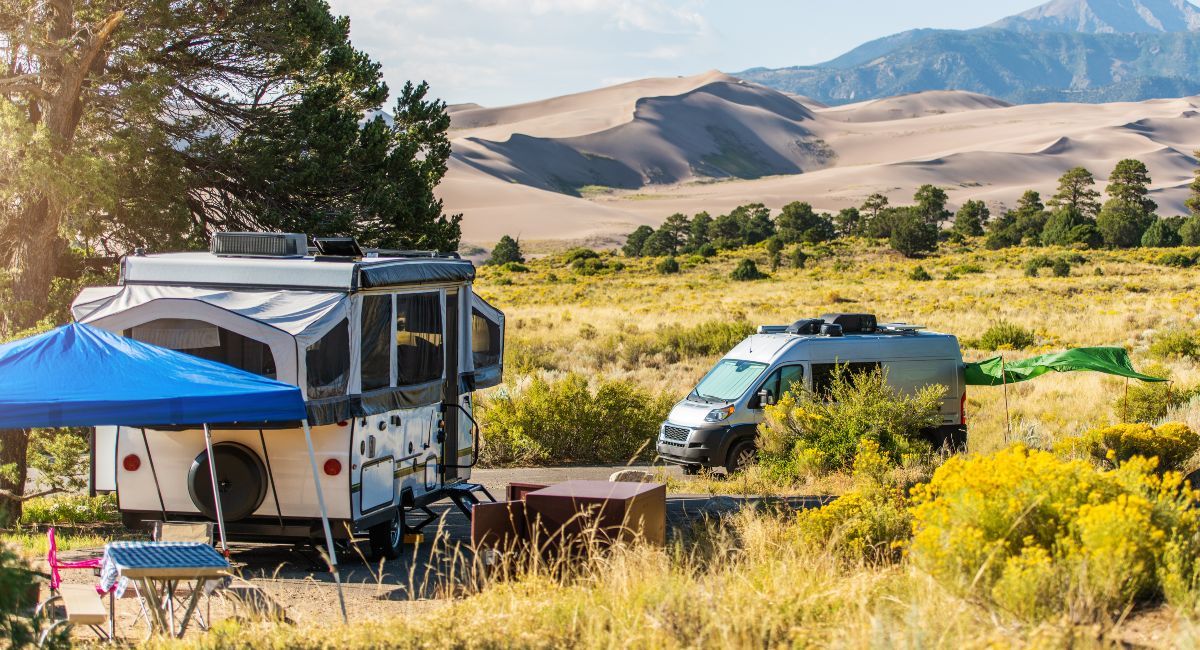
Three things matter most: heat management, water capacity, and dump-station spacing. Most renters underestimate all three. The desert isn't forgiving the way a humid Eastern park is — if you run out of water in Capitol Reef, your day is over; if your A/C dies in Arches in July, the rig becomes uninhabitable.
The desert-RV checklist:
- Heat. Dry-camping means no shore power for A/C overnight. Solar + a strong house battery bank, or a quiet generator (8 a.m.–8 p.m. quiet hours apply at most parks), or accept hot nights and open the vents. Two roof vents with fans flowing in opposite directions is the universal hack.
- Water. Fresh-water tank topped off before each in-park stretch. A 40-gallon tank covers about 2–3 days of moderate use for two people. Refill at gateway parks or in-park potable water stations (Cades Cove-style — read the signs).
- Dump stations. Map them. The biggest stretch without a dump is Bryce → Monument Valley → Arches (~250 mi). Plan a stop at Page (between Grand Canyon and Monument Valley) or at a Moab gateway park to dump before Arches.
- Tire pressure. Hot desert pavement raises tire pressure significantly. Check cold-morning pressure; don't bleed air to the cold spec while the tire is at 120°F.
- Park entrance pass. The America the Beautiful annual pass is $80 for US residents and $250 for nonresidents in 2026 — sold digitally through Recreation.gov. For a five-park trip, the pass pays for itself versus $35/vehicle/park.
- Phone storage. Download offline maps for every park; cell coverage is spotty everywhere except Springdale and Moab.
A pet-safety reminder: if you're traveling with a dog, plan all park hikes for sunrise or after 4 p.m. The shade hike that's fine for you can kill a dog on a 95°F day. The South Rim of the Grand Canyon and Bryce stay 10–20°F cooler than Arches and Capitol Reef in summer — pick those if a summer trip is unavoidable.
Can you boondock between the parks — and should you go one-way?
Yes — and yes, if you can. The long desert legs between parks are prime free BLM boondocking. 14 days per 28-day period on most BLM land, free of charge, if your rig is self-contained. The stretches from Capitol Reef to Monument Valley, Monument Valley to the Grand Canyon, and on the I-70 corridor through Utah have abundant dispersed camping that turns "boring driving days" into the cheapest, quietest nights of the trip.
Renters we talk to love the long desert legs once we point them to free BLM boondocking — it turns the "dead miles" between parks into the cheapest, quietest nights of the trip. The best BLM stretches for this loop:
- Around Page (Glen Canyon NRA boundary): Stunning dispersed sites near Horseshoe Bend and Antelope Canyon access.
- Bears Ears / Comb Ridge corridor: UT-261 and the Valley of the Gods are some of the prettiest free camping in the country. Beautiful between Arches and Monument Valley.
- South of Moab on UT-191: Quick-access dispersed sites if you want a cheap night before Arches.
- Beaver Dam Wash NCA, near St. George: Useful first-night dispersed before pushing into Zion.
Renters we hear from who've done both the round-trip and the one-way versions usually say the one-way is the right choice for a 10+ day loop, and the round-trip works fine for the 5–7-day sampler.
The one-way / delivery decision:
- Round-trip loop from Las Vegas or SLC works if the start and end city are the same as your home airport. You'll add 300–500 miles of backtrack.
- One-way Vegas → SLC (or Vegas → Moab → SLC drop) saves the backtrack but costs a one-way fee.
- Delivery to a gateway full-hookup park is the cleanest if driving the rig the full distance isn't your thing. Have a rig delivered to a Springdale or Las Vegas gateway and explore the parks in a rental car.
For the wider Arizona browse, the Arizona RV rentals hub covers the Grand Canyon leg pickup options, and the Zion National Park guide anchors the most-visited park in detail.
Key takeaways
- Classic loop: Zion → Bryce → Grand Canyon → Monument Valley → Arches/Canyonlands → Capitol Reef. 5/7/10–14 days.
- Spring or fall, not summer. Desert heat is brutal and dangerous for kids and pets.
- Watchman (Zion) and Trailer Village (Grand Canyon) are the only meaningful in-park hookups. Everything else is dry-camping.
- 2026 changes: Zion-Mt. Carmel large-vehicle rule (June 7), $80 resident / $250 nonresident annual pass, Arches dropped timed entry, North Rim back online with no water.
- BLM boondocking turns the long desert legs into the cheapest, quietest nights of the trip.
About this guide
This guide was prepared by the Outdoorsy editorial team. The 2026 changes — Zion's June 7 large-vehicle restrictions on the Mt. Carmel Highway, the digital America the Beautiful pass with $80 resident / $250 nonresident pricing, Arches' decision to drop timed entry, and the Grand Canyon North Rim's adaptive 2026 reopening — were verified on June 12, 2026 against primary NPS and Department of the Interior sources: the NPS Zion large-vehicle news release, the Department of the Interior 2026 park pass announcement, the NPS entrance passes page, and per-park camping pages. Park rules change every season — confirm before you travel.