

Picking the wrong RV class is like showing up to a trail in dress shoes. You’ll survive, but you’ll spend the whole trip wishing you’d made a different call at the start.
The good news: there are really only three main classes of motorhome to understand. They exist on a spectrum — from nimble and simple to spacious and full-featured — and once you know where you fall on that spectrum, the decision mostly makes itself.
Here’s how to think about it.
First, What We’re Actually Comparing
This article covers the three classes of motorhomes — self-propelled RVs where the living space and the engine are all one unit. We’re not covering travel trailers or fifth wheels here (those are towed, not driven, and a different conversation entirely).
- Class A — The big one. Bus-style. Maximum space, maximum commitment.
- Class B — The camper van. Most maneuverable, least space.
- Class C — The middle ground. Built on a truck chassis, family-friendly, the most popular choice for first-time renters.
Each class has a version of the trip it was built for. Let’s find yours.
Class B: The Camper Van
What It Is
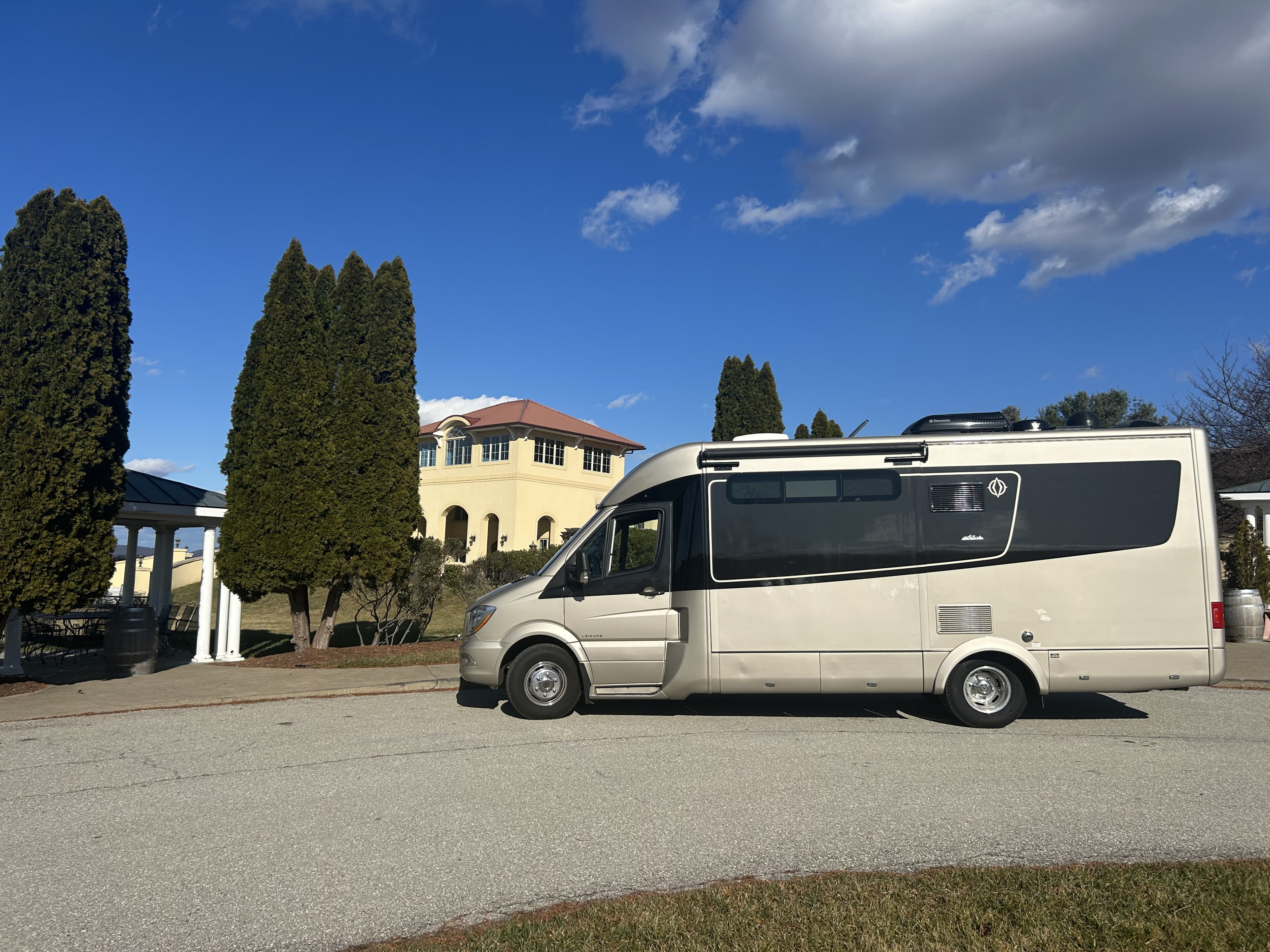
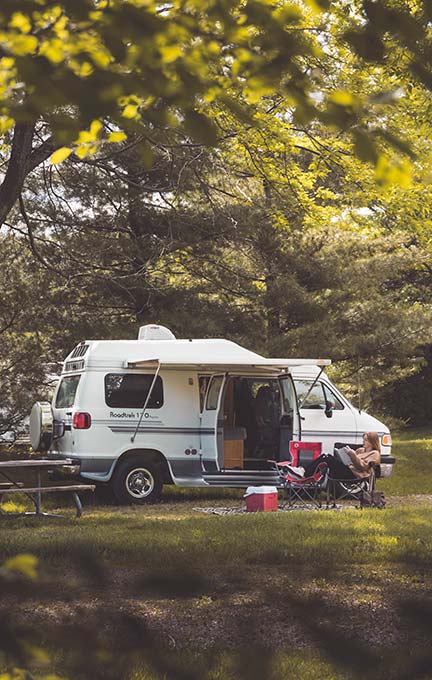
Class B motorhomes are built on a standard cargo van chassis — think Mercedes Sprinter, Ram ProMaster, or Ford Transit. They’re the smallest motorhomes you can rent, typically running 18–24 feet long and fitting in a standard parking space.
Everything you need is inside: a sleeping area that converts from seating, a small kitchen, storage, and usually a compact bathroom or wet bath (toilet and shower in the same tight space). It’s not luxury — it’s efficiency.
Who It’s For
Two people. Maybe two people and a dog if everyone’s agreeable about personal space.
Class B is the right call when the trip itself is the point — when you want to move quickly, explore freely, and not spend 20 minutes backing into every campsite. Vanlifers built a whole culture around these things for a reason. They’re capable, discreet, and handle exactly like a large van, which most people can figure out in a parking lot.
If you’re planning to cover ground — multiple stops, spontaneous detours, urban areas where parking is a real consideration — the Class B is your vehicle.
What You Give Up
Space. Full stop. A Class B is functional for two but genuinely uncomfortable for three or more, especially over multiple nights. There’s no slideout, no separate bedroom, no room for a family of four to spread out after dinner. If the group is larger than two, keep reading.
Average Rental Cost
$100–$175/night
Best For
- Couples and solo travelers
- Weekend and week-long trips
- Road trips with lots of stops
- Destinations with limited parking (national parks, cities)
- First-time RV renters who want the most car-like driving experience
Class C: The Workhorse
What It Is
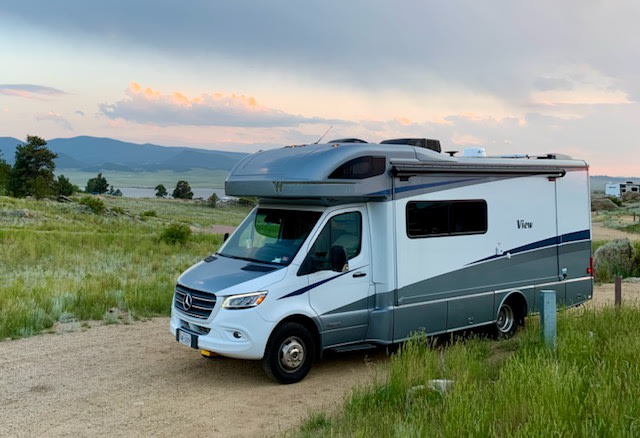
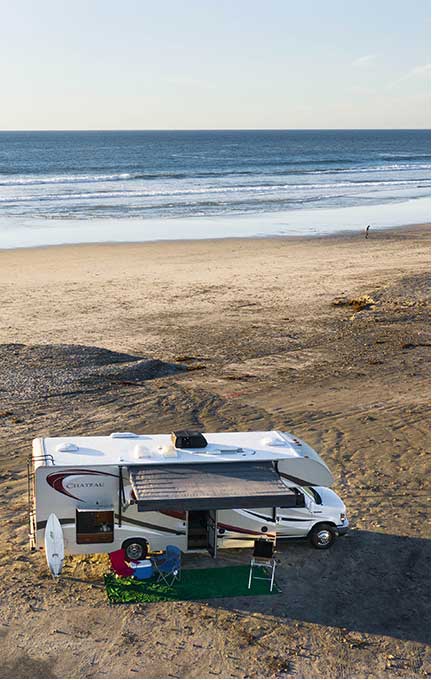
Class C motorhomes are built on a cutaway truck chassis — the same frame used for box trucks and large passenger vans. They typically run 22–32 feet long, and the dead giveaway is the cabover: a sleeping or storage area that extends over the cab of the truck, above the driver and passenger seats.
Class C rigs have real bedrooms, real bathrooms, real kitchens, and often slideouts that extend the living space when you’re parked. They sleep 4–8 people comfortably and come standard with the amenities most families are looking for.
Who It’s For
Families. Groups. Anyone who wants to actually live in the thing for a week rather than just sleep in it.
The Class C is the most rented class on Outdoorsy for a reason: it threads the needle between capability and accessibility. It’s bigger than a van, but it doesn’t drive like a city bus. Most people are comfortable behind the wheel within an hour. Campgrounds are built around this size class. It fits where you want to go.
If you’re planning a week in a national park with two kids, a week on the coast with another couple, or a multi-generational trip where grandma needs an actual bed — this is your rig.
What You Give Up
Some maneuverability. A Class C is not going to fit in street parking in San Francisco. Narrow canyon roads and tight campground loops require attention. The driving adjustment is real — but it’s manageable, and most first-time renters are genuinely surprised by how quickly they adapt.
Fuel economy is also a conversation. Most Class C motorhomes average 10–14 MPG. Factor that into your budget if the route covers serious mileage.
Average Rental Cost
$150–$250/night
Best For
- Families with kids
- Groups of 3–6 people
- First-time RV renters who need space but don’t want to go full Class A
- Week-long or longer trips
- Campground-based travel with a home base
Class A: The Full Experience
What It Is
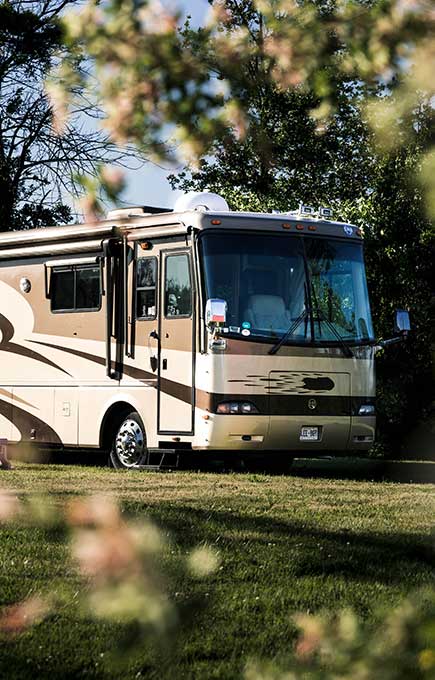
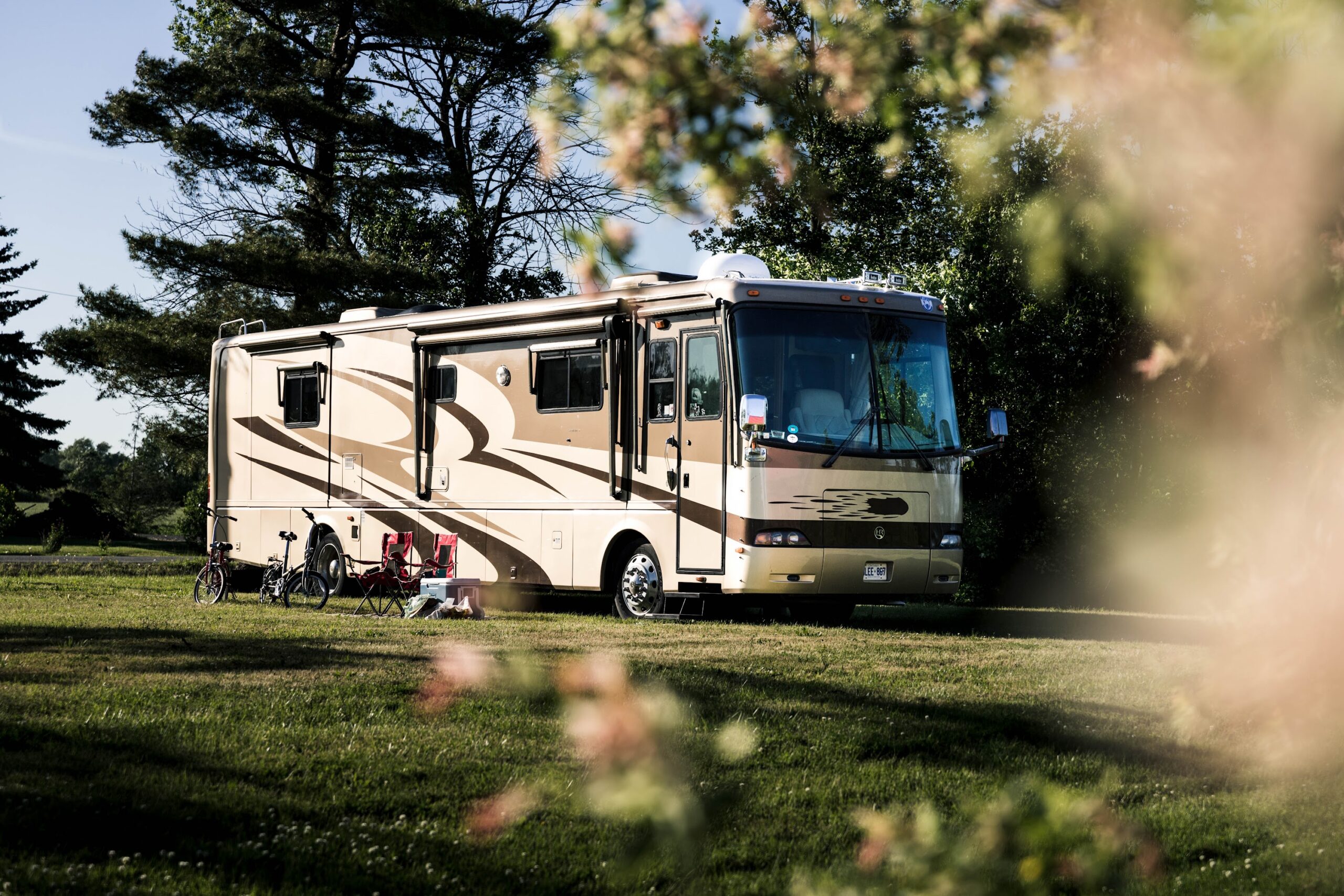
Class A motorhomes are built on either a commercial bus chassis or a heavy-duty truck chassis. They run 24–45 feet long, drive like a bus, and feel like a studio apartment on wheels when you step inside.
Full-sized kitchen. Separate bedroom. Multiple slideouts. Sometimes a washer/dryer. Enough storage for a month’s worth of gear. These are the rigs you see rolling down the highway with a toad (towed vehicle) attached to the back, and for good reason — when you’re this committed to the road, you want the full setup.
Who It’s For
Large groups and extended trips — or anyone who refuses to compromise on comfort.
Class A is the right call when you want the RV to feel like a home, not an adventure vehicle. For a multigenerational family trip, a 10-day national park circuit, or a group of friends who want real sleeping arrangements for six, a Class A delivers what nothing else can.
It’s also the right call for experienced drivers who understand what they’re getting into. A 40-foot diesel pusher is a serious piece of equipment. It’s not hard to drive once you’ve got your bearings, but it demands full attention and deliberate movement, especially in campgrounds and tight quarters.
What You Give Up
Easy spontaneity. A Class A is a destination machine. You’re not ducking into a small-town diner parking lot on a whim. You’re not navigating city streets without a plan. Some campgrounds have maximum length limits that rule out the larger Class A rigs entirely — always verify before you book.
And the cost. Class A is the most expensive class to rent, both in nightly rate and in fuel. A 40-foot diesel pusher gets 7–10 MPG. On a 1,000-mile trip, that fuel line item is real.
Average Rental Cost
$225–$400/night
Best For
- Experienced drivers or those willing to learn
- Large groups (6–10 people)
- Extended trips of 10+ days
- Families or groups who prioritize living comfort over maneuverability
- Full-featured road trips with established destinations
Side-by-Side: The Quick Version
| Class B | Class C | Class A | |
|---|---|---|---|
| Length | 18–24 ft | 22–32 ft | 24–45 ft |
| Sleeps | 2–3 | 4–8 | 6–10 |
| Drives like | Large van | Box truck | Bus |
| Best for | Couples, weekend trips | Families, first-timers | Large groups, long trips |
| Avg nightly rate | $100–$175 | $150–$250 | $225–$400 |
| Fuel economy | 18–24 MPG | 10–14 MPG | 7–12 MPG |
| Parking | Easy | Manageable | Requires planning |
| Learning curve | Low | Moderate | Higher |
| Campground access | Everywhere | Most | Some length restrictions |
The Questions That Make the Decision
If you’re still on the fence, answer these four questions. They’ll get you there.
How many people are coming? 1–2 people → Class B is on the table. 3–5 people → Class C. 6 or more → Class A or a large Class C.
How long is the trip? 1–3 nights → Class B or small Class C. 4–7 nights → Class C sweet spot. 8+ nights → Class A starts making more sense.
How experienced are you behind the wheel of a large vehicle? Never driven anything bigger than an SUV → Start with Class B or a smaller Class C. Comfortable with trucks and large vehicles → Any class is manageable. Prior RV or large vehicle experience → Class A is fair game.
What kind of campgrounds are you using? Mix of sites, national parks, flexibility → Class B or C. Full-hookup campgrounds, established sites → Any class works. Boondocking, remote or primitive sites → Class B or small Class C; verify length limits.
One More Thing Worth Saying
The “right” RV is the one that matches the trip you’re actually taking — not the one that sounds impressive, and not the smallest thing you can get away with.
Renting too big means you’re wrestling the vehicle when you should be enjoying the destination. Renting too small means you’re staring at the ceiling at 2 a.m. wishing you had more room.
Pick the class that fits your group, your route, and your comfort level. Everything else is details.
The road doesn’t care what class you’re in. It just cares that you showed up.
Browse RV rentals by class and find the right rig for your trip at Outdoorsy.com